What Makes an Interview Feel Expensive Without Feeling Overproduced?
Interviews
September 25, 2026
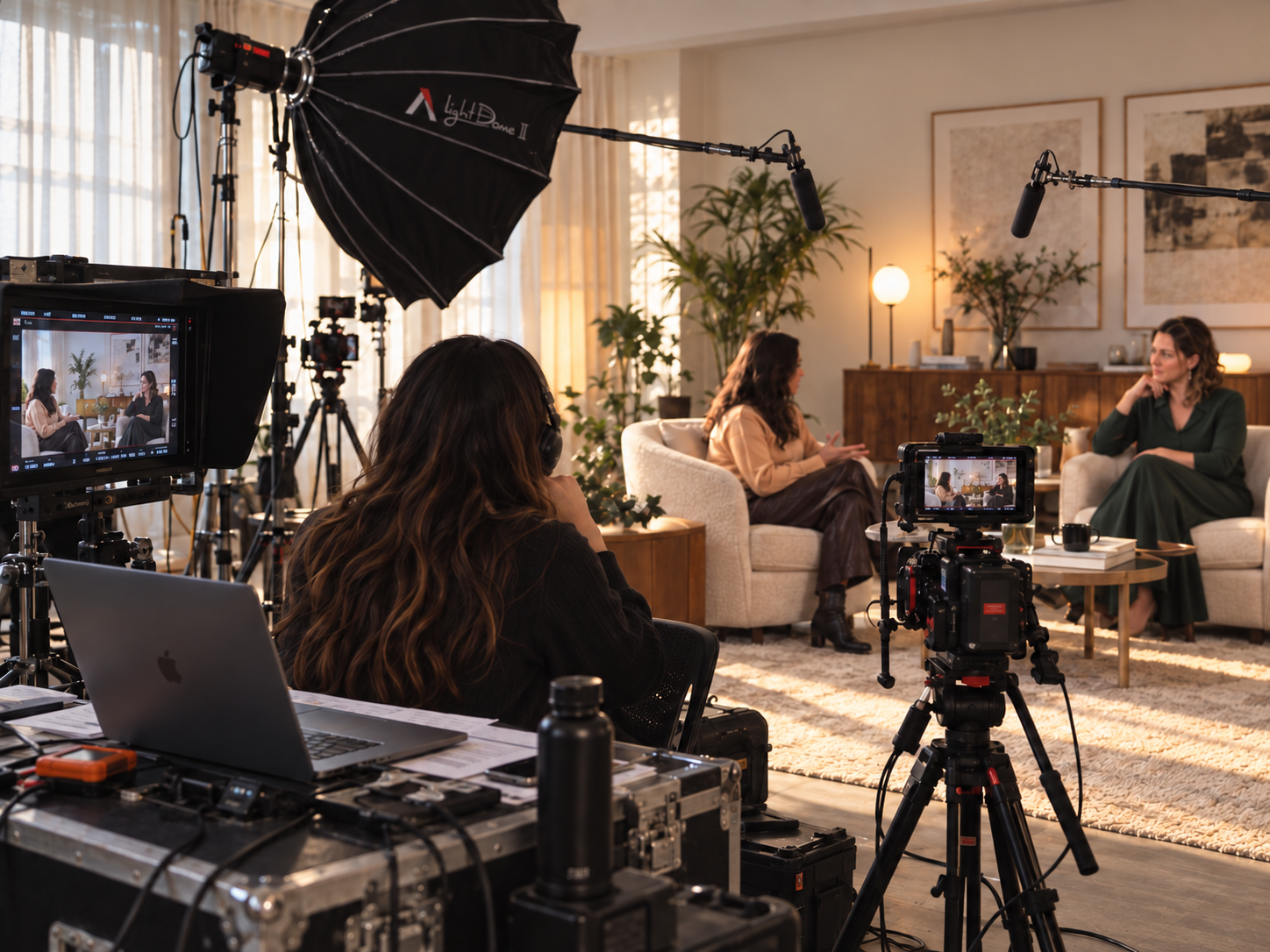
There is a point in interview production where everyone becomes so impressed with how much equipment is in the room that we forget there is an actual human being sitting in the middle of all of it trying not to look nervous.
You can have three cameras, a giant softbox, perfect hair light, beautiful practicals in the background, monitors everywhere and a crew moving around like we are launching a satellite, but if the person being interviewed is thinking about where to put their hands the entire time, none of that is really helping.
I care a lot about lighting, framing and sound because those things absolutely matter, but I care just as much about getting the person to a place where they stop thinking about the cameras, because that is usually when the interview finally becomes good.
Sometimes that means turning the interview into more of a conversation, changing the eyeline, asking a better question or simply giving someone permission to answer it in their own words instead of trying to memorize a paragraph that somebody wrote for them.
The goal is not to make the production smaller just for the sake of making it smaller, it is to make every part of the production earn its place.
Good lighting should make someone look great without making you think about the lighting, multiple cameras should give the edit options without making the room feel like a surveillance system, and the set should feel intentional without looking like someone spent forty minutes placing a decorative book at exactly a 37 degree angle.
That balance is what makes an interview feel expensive to me, because expensive does not always mean more, sometimes it just means everything feels considered and nothing feels unnecessary.
Creative production for brands in PA, NJ and NY.
Privacy Policy© 2026 Muse Works Studio LLC. All rights reserved.